- ≥99% by HPLC
- Lot-matched certificate of analysis
- Ships next business day, tracked
PE-22-28 Peptide
Spadin-derived heptapeptide studied as a TREK-1 potassium channel blocker
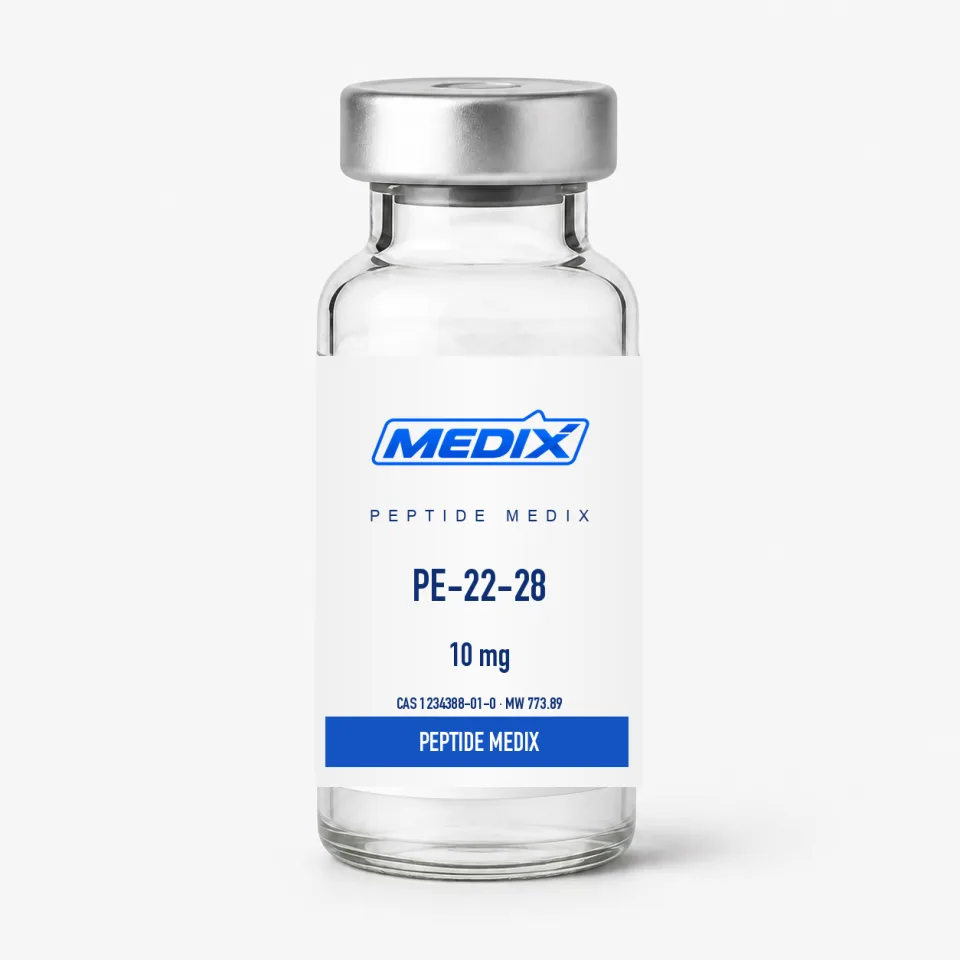
- FormLyophilized white powder in a sealed glass vial
- Mol. weight773.89 g/mol
- Research areasElectrophysiology, mood-related behavioral models, hippocampal neurogenesis and synaptic markers
Overview
PE-22-28 is a synthetic heptapeptide corresponding to residues 22-28 of spadin, a peptide released from the propeptide domain of sortilin. Spadin itself attracted attention as a natural blocker of TREK-1, a two-pore-domain potassium channel that has been genetically linked to mood regulation in rodent studies. PE-22-28 is the shortened fragment retained after investigators mapped which portion of spadin carried the channel-blocking activity.
Peptide Medix supplies PE-22-28 as a 10 mg lyophilized vial for laboratory research — patch-clamp and receptor assays, analytical method work, and approved animal studies. Each lot is HPLC-purified with mass-spec identity confirmation and a lot-matched certificate of analysis available on request. It ships from a United States facility. This is a research chemical and is not a drug, supplement or consumer product.
Specifications
Identity
- CAS number
- 1234388-01-0
- Molecular formula
- C35H55N11O9
- Molecular weight
- 773.89 g/mol
- Amino acid sequence
- Gly-Val-Ser-Trp-Gly-Leu-Arg (GVSWGLR), linear with unmodified termini
- Peptide class
- Synthetic heptapeptide ion-channel blocker fragment
Supply & purity
- Form
- Lyophilized white powder in a sealed glass vial
- Purity
- ≥99% by HPLC; lot-matched COA available
- Solubility
- Soluble in bacteriostatic water and sterile water
Handling & storage
- Storage (lyophilized)
- −20 °C, protected from light and moisture
- Storage (reconstituted)
- 2–8 °C; aliquot to avoid repeated freeze-thaw
Additional detail
- Available size
- 10 mg
- Primary research target
- TREK-1 (KCNK2) two-pore-domain potassium channel
- Research areas
- Electrophysiology, mood-related behavioral models, hippocampal neurogenesis and synaptic markers
Working out the concentration
PE-22-28 ships as a lyophilized powder, so nothing on this page can state a concentration: the figure you work with is the one you create when you add diluent. Put the vial mass and the volume you intend to use into the peptide reconstitution calculator and it returns mg/mL, mcg/mL and the mass sitting at each mark on a U-100 syringe.
Where a method is written in molar terms instead, the molecular weight above — 773.89 g/mol — is the input the molarity calculator needs.
Certificate of analysis
Every lot of PE-22-28 is released against a certificate of analysis: the batch-specific laboratory data for that lot, not a generic document for the compound. The lot number on the certificate matches the lot number printed on the label you receive — the vial label itself, where the product is vialled — so the record and the material it describes can always be reconciled.
Purity: ≥99% by HPLC — the specification for this listing. The figure for the lot you receive is the one reported on that lot’s certificate.
No lot certificate is on display on this page at the moment. That is a publishing state and not a testing one: lots are released and documented as described above whether or not the document is posted here, and we will send what exists for the lot in stock, or for a lot already on your bench, by its number.
Certificates are available on request before you order as well as after, with no account and no charge. Request the certificate for this listing, read the testing and documentation policy in full, or see how to read a peptide COA.
Questions about PE-22-28
What is PE-22-28 a fragment of?
It corresponds to residues 22 through 28 of spadin, a peptide generated from the propeptide region of sortilin. Researchers narrowed spadin down to this heptapeptide while mapping which part of the sequence carried TREK-1 channel-blocking activity in electrophysiological assays.
Is the peptide third-party tested?
Yes. Each lot is analyzed by reversed-phase HPLC for purity and by mass spectrometry for identity, with a lot-matched certificate of analysis available on request. The COA reports purity, observed mass and analysis date for the exact batch shipped.
What is TREK-1 and why is it studied?
TREK-1 is a two-pore-domain background potassium channel encoded by KCNK2. Rodent genetic studies linked its absence to a mood-related behavioral phenotype, which made pharmacological blockade an active research question and made spadin-derived fragments useful laboratory tools.
How stable is PE-22-28 in solution?
It is a short linear peptide with unmodified termini, so it is more susceptible to exopeptidase cleavage than acetylated or amidated analogs. Keep reconstituted material refrigerated at 2–8 °C, aliquot for single use, and keep working samples cold during assay sessions.
What size does it ship in?
PE-22-28 is supplied as a single 10 mg lyophilized vial. That quantity generally covers a full concentration-response series in cell-based electrophysiology work with material left over for analytical confirmation.
Related