- Lot-matched certificate of analysis
- Ships next business day, tracked
Thymalin Peptide
Standardised thymic polypeptide complex, lyophilized research vials
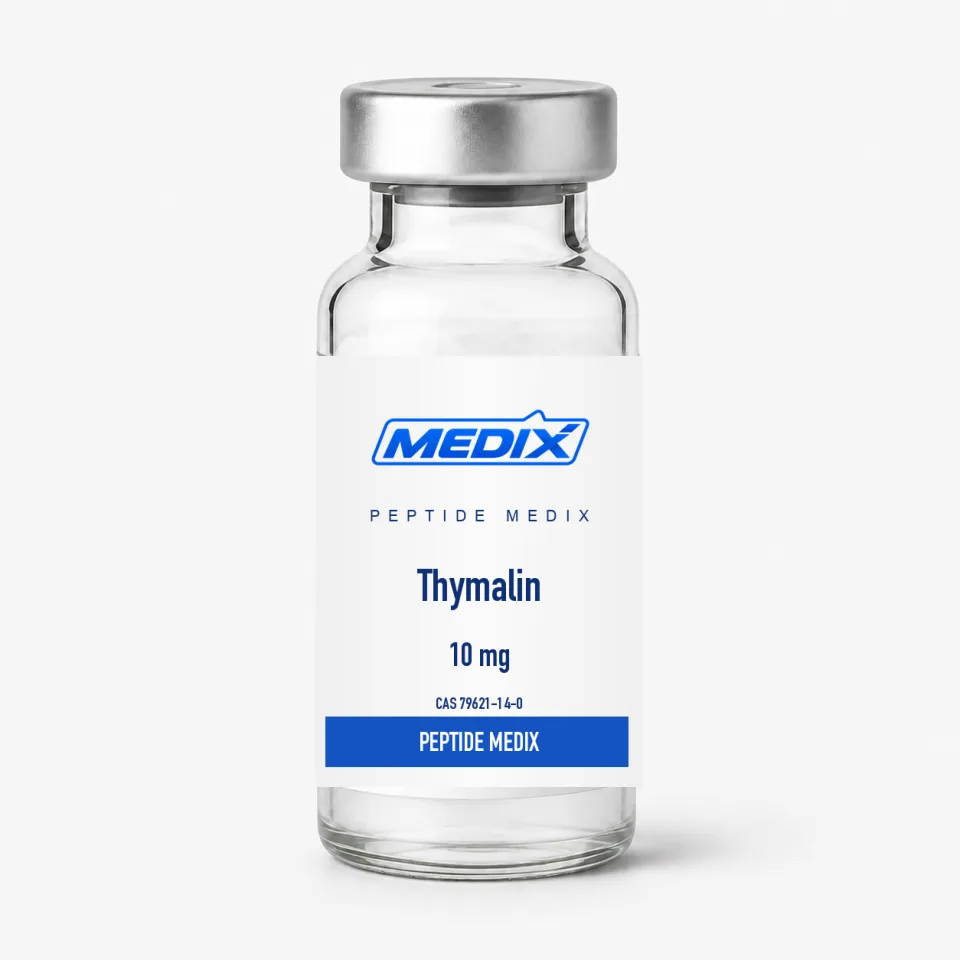
- FormLyophilized polypeptide complex, sealed glass vial with crimped stopper
- Mol. weightNot a single defined mass — a polypeptide fraction, not one compound
- Research areasImmune parameters in ageing models, thymic bioregulator studies
Overview
Thymalin is not a single molecule. It is a standardised complex of low-molecular-weight polypeptides obtained from thymus tissue, developed within the Russian peptide bioregulator programme associated with Vladimir Khavinson and studied there since the 1970s. That distinction matters for anyone specifying reagents: there is no single sequence, formula or exact molecular mass to quote, and a certificate of analysis reports the complex against its specification rather than a purity figure for one compound.
The bioregulator concept regards short tissue-derived peptide fractions as signals that act on the tissue of origin, and Thymalin is the thymic member of that family, sitting alongside Epitalon for the pineal gland and Vilon and Prostamax for other tissues. Published work from that programme covers immune parameters in ageing animal models and long-running observational human cohorts.
Specifications
Identity
- CAS number
- 79621-14-0
- Molecular weight
- Not a single defined mass — a polypeptide fraction, not one compound
- Amino acid sequence
- Not applicable; the complex contains multiple peptide species
- Peptide class
- Tissue-derived peptide bioregulator (thymic)
Supply & purity
- Form
- Lyophilized polypeptide complex, sealed glass vial with crimped stopper
- Available sizes
- 10 mg, 20 mg
Handling & storage
- Storage (lyophilized)
- −20 °C, sealed and protected from light and moisture
- Storage (reconstituted)
- 2–8 °C, protected from light, used within the study window
Additional detail
- Composition
- Standardised mixture of low-molecular-weight thymic polypeptides
- Source tissue
- Thymus
- Documentation
- Lot-matched COA reporting the complex against its specification
- Research areas
- Immune parameters in ageing models, thymic bioregulator studies
Working out the concentration
Thymalin ships as a lyophilized powder, so nothing on this page can state a concentration: the figure you work with is the one you create when you add diluent. Put the vial mass and the volume you intend to use into the peptide reconstitution calculator and it returns mg/mL, mcg/mL and the mass sitting at each mark on a U-100 syringe.
Certificate of analysis
Every lot of Thymalin is released against its own lot documentation, and where the manufacturer issues a certificate of analysis for it, that certificate is the record for the lot rather than a generic document for the compound. The lot number on the certificate matches the lot number printed on the label you receive — the vial label itself, where the product is vialled — so the record and the material it describes can always be reconciled.
This listing carries no purity percentage, so none is claimed for it here. Where the manufacturer issues analytical documentation for a lot of this item, it is passed on unaltered — ask and we will send whatever exists.
No lot certificate is on display on this page at the moment. That is a publishing state and not a testing one: lots are released and documented as described above whether or not the document is posted here, and we will send what exists for the lot in stock, or for a lot already on your bench, by its number.
Certificates are available on request before you order as well as after, with no account and no charge. Request the certificate for this listing, read the testing and documentation policy in full, or see how to read a peptide COA.
Questions about Thymalin
What is Thymalin?
Thymalin is a standardised complex of low-molecular-weight polypeptides derived from thymus tissue, rather than a single synthetic molecule. It belongs to the peptide bioregulator family developed in Russian laboratories and is supplied here as a lyophilized research powder.
Why is there no molecular formula or sequence listed?
Because the material is a fraction containing multiple peptide species rather than one compound. There is no single mass to confirm by mass spectrometry and no single sequence to quote, so the material is specified by source, process and analytical profile instead.
How does Thymalin differ from Thymosin Alpha-1?
Thymosin Alpha-1 is a defined twenty-eight residue peptide with a known sequence, formula and mass that can be verified analytically. Thymalin is a mixture. Both originate in thymic extract research, but they are not interchangeable reagents in a study design.
What documentation comes with a lot?
A certificate of analysis matched to the lot number on the vial, reporting the complex against its manufacturing specification. Because purity cannot be expressed as a single area-percent value for a fraction, the document describes conformity rather than one chromatographic peak.
How strong is the published evidence?
The record consists largely of rodent studies and observational human cohort reports from the originating research programme, much of it published in Russian-language journals. Independent replication outside that programme is limited, which researchers should weigh when interpreting results.
Related