- Peptide purity input: ≥99% by HPLC per component
- Lot-matched certificate of analysis
- Ships next business day, tracked
Tissue Repair & Healing Peptides
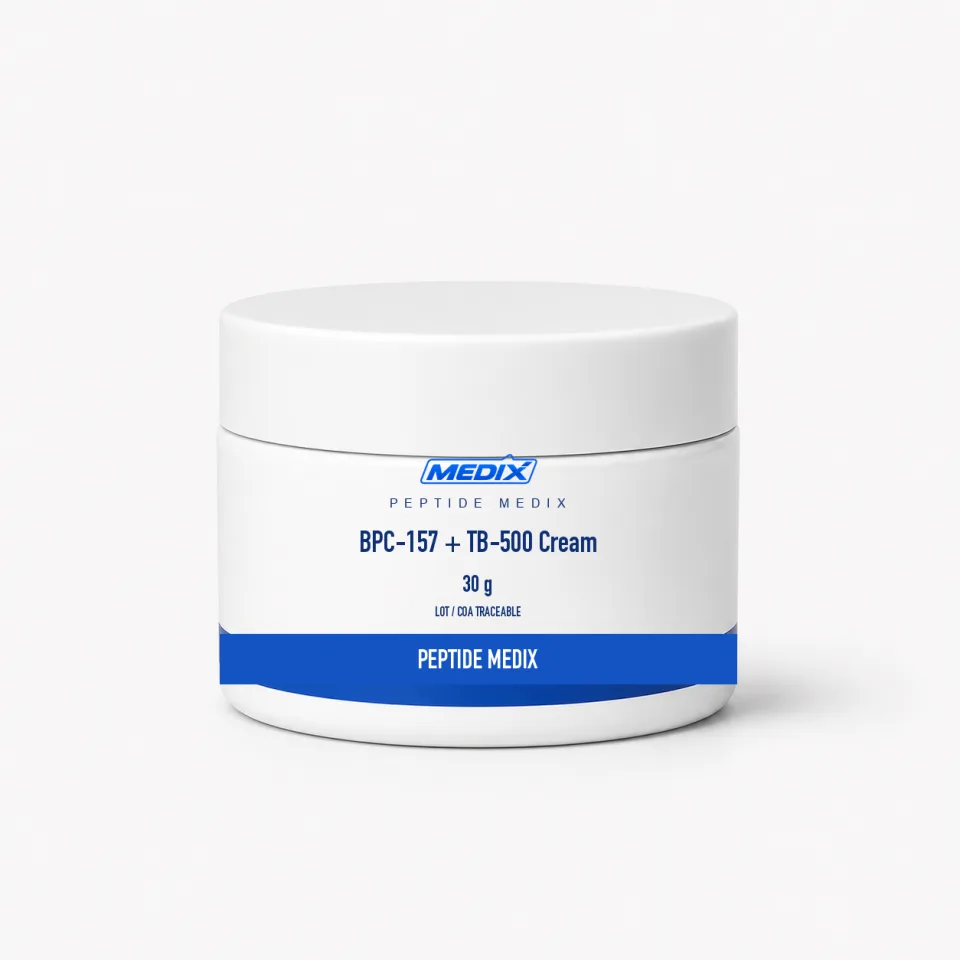
BPC-157 + TB-500 Cream
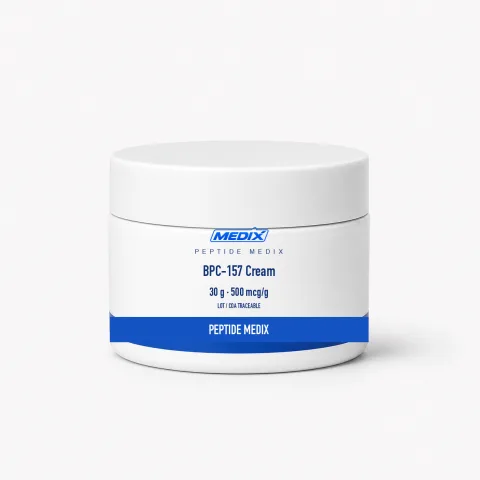
Two-peptide emollient cream, 500 mcg/g each of BPC-157 and TB-500
- FormEmollient oil-in-water cream in a screw-top jar
- Research areasPercutaneous penetration of large hydrophilic peptides, vehicle and occlusion effects, ex vivo skin models, fibroblast migration and wound-model work
Overview
This cream carries both tissue-repair peptides from our vial range in a single emollient oil-in-water base, at 500 micrograms per gram of each — 0.05% w/w apiece, 1 mg of total peptide per gram. A 30 g jar therefore holds roughly 15 mg of BPC-157 and 15 mg of TB-500; a 50 g jar holds about 25 mg of each. Both actives are built from ≥99% HPLC-purity material with a lot-matched certificate of analysis.
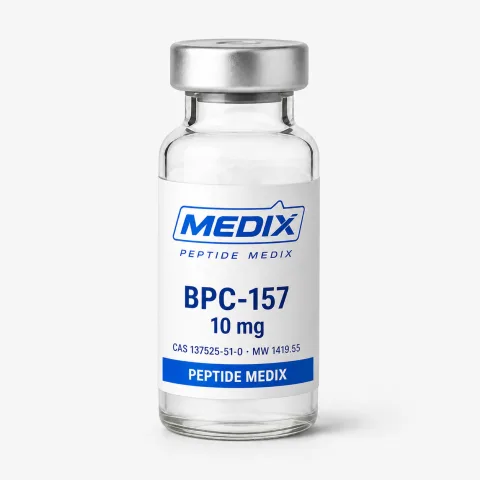
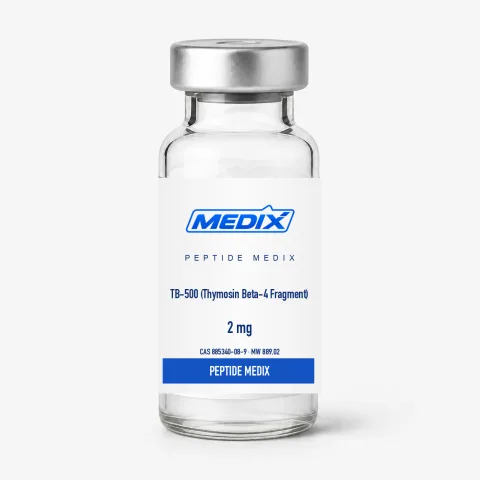
The two peptides are combined because their published mechanisms sit at different points in the repair sequence. BPC-157 is a synthetic 15-amino-acid fragment of a gastric protein, sequence Gly-Glu-Pro-Pro-Pro-Gly-Lys-Pro-Ala-Asp-Asp-Ala-Gly-Leu-Val, studied largely for angiogenic signalling, fibroblast behaviour and mucosal integrity. TB-500 is the acetylated thymosin beta-4 (17–23) heptapeptide, Ac-Leu-Lys-Lys-Thr-Glu-Thr-Gln, which carries the actin-binding motif of its parent protein and appears in the literature on cell migration and wound closure. Researchers pairing them are usually testing whether vascular and migratory endpoints respond differently together than apart.
Specifications
Supply & purity
- Form
- Emollient oil-in-water cream in a screw-top jar
- Available sizes
- 30 g and 50 g jars
Additional detail
- Active concentrations
- 500 mcg/g BPC-157 and 500 mcg/g TB-500 (0.05% w/w each, 1 mg/g total)
- Approximate peptide content
- ≈15 mg of each peptide per 30 g jar; ≈25 mg of each per 50 g jar
- Peptide purity input
- ≥99% by HPLC per component; lot-matched COA available
- BPC-157 identifiers
- CAS 137525-51-0 · C62H98N16O22 · 1419.55 g/mol
- BPC-157 sequence
- Gly-Glu-Pro-Pro-Pro-Gly-Lys-Pro-Ala-Asp-Asp-Ala-Gly-Leu-Val
- TB-500 identifiers
- CAS 885340-08-9 · C38H68N10O14 · 889.02 g/mol
- TB-500 sequence
- Ac-Leu-Lys-Lys-Thr-Glu-Thr-Gln (thymosin beta-4 residues 17–23)
- Vehicle
- Emollient oil-in-water base, no added fragrance or colourant
- Research areas
- Percutaneous penetration of large hydrophilic peptides, vehicle and occlusion effects, ex vivo skin models, fibroblast migration and wound-model work
- Storage
- Cool and dark, ideally 2–8 °C; keep the jar closed between uses
- Preparation required
- None — fixed loading per gram, no reconstitution step
Units and conversions
Because this is supplied at a stated strength, the question is rarely how much diluent to add — it is what that strength looks like in the units your method is written in. Convert mcg to mg, mL to µL and back with the unit converter.
Certificate of analysis
Every lot of BPC-157 + TB-500 Cream is released against a certificate of analysis: the batch-specific laboratory data for that lot, not a generic document for the compound. The lot number on the certificate matches the lot number printed on the label you receive — the vial label itself, where the product is vialled — so the record and the material it describes can always be reconciled.
Peptide purity input: ≥99% by HPLC per component — the specification for this listing. The figure for the lot you receive is the one reported on that lot’s certificate.
No lot certificate is on display on this page at the moment. That is a publishing state and not a testing one: lots are released and documented as described above whether or not the document is posted here, and we will send what exists for the lot in stock, or for a lot already on your bench, by its number.
Certificates are available on request before you order as well as after, with no account and no charge. Request the certificate for this listing, read the testing and documentation policy in full, or see how to read a peptide COA.
Questions about BPC-157 + TB-500 Cream
How much peptide does each jar contain?
Both actives are loaded at 500 micrograms per gram, so a 30 g jar holds approximately 15 mg of BPC-157 and 15 mg of TB-500, and a 50 g jar approximately 25 mg of each. Total peptide content is 1 mg per gram of cream.
How does this differ from the single-peptide BPC-157 cream?
The base and the BPC-157 loading are the same; this version adds TB-500 at an equal 500 mcg/g. That makes the two products a natural pair for studies isolating what the second peptide contributes, since the vehicle and the first active are held constant.
Will peptides this large cross intact skin?
Not to any degree that should be assumed. Both are hydrophilic and well above the several-hundred-dalton range passive diffusion favours. Whether measurable flux occurs depends on vehicle, occlusion, contact time and barrier state, and it needs demonstrating in the model system being used.
Is a certificate of analysis available?
Yes. Each peptide lot used in manufacture is analysed by reverse-phase HPLC to ≥99% purity with identity confirmation, and lot-matched certificates are available on request. Quote the batch code printed on the jar when asking for them.
How should the cream be stored?
Cool and dark, ideally refrigerated at 2–8 °C, with the jar tightly closed. Emulsions are more sensitive to temperature cycling than lyophilized powder, so avoid repeated warming and cooling, and discard if the base separates, discolours or changes odour.
Related