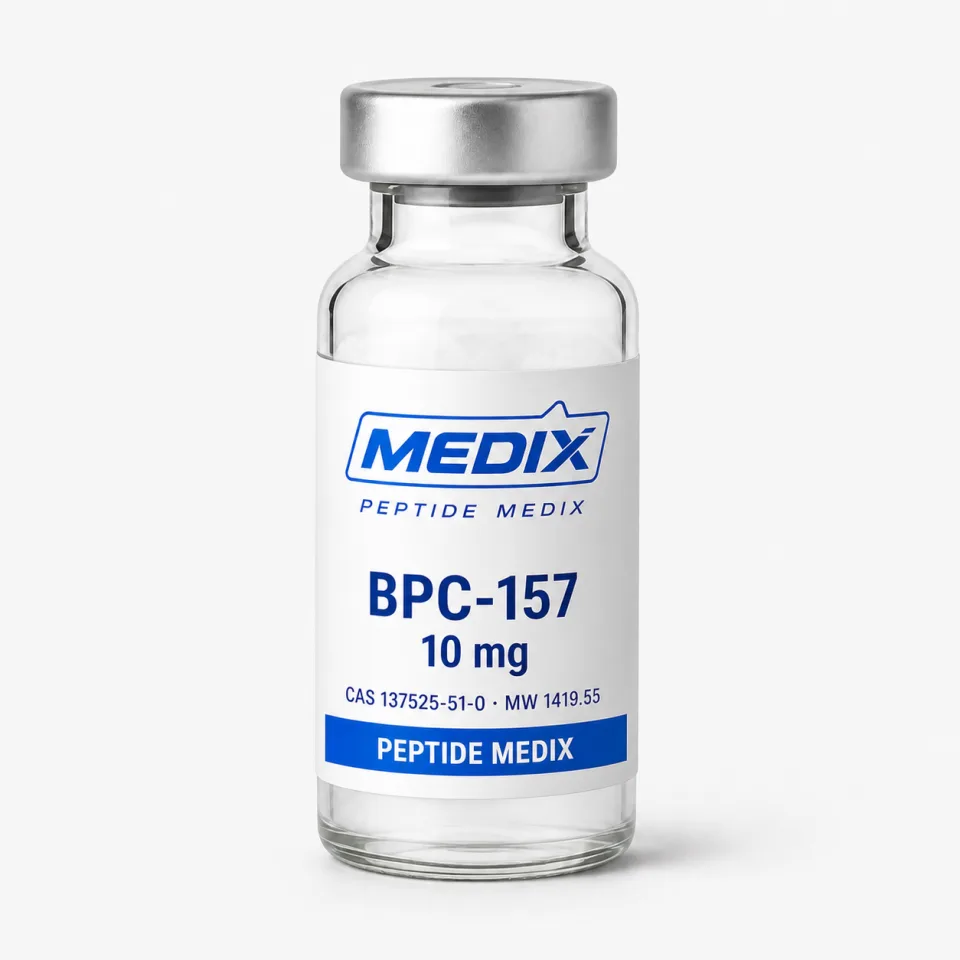
- ≥99% by HPLC
- Lot-matched certificate of analysis
- Ships next business day, tracked
Tissue Repair & Healing Peptides
BPC-157 Peptide
Synthetic 15-amino-acid gastric pentadecapeptide, lyophilized research vials
- FormLyophilized powder, sealed glass vial with crimped stopper
- Mol. weight1419.55 g/mol
- Research areasTendon and ligament repair, GI mucosal integrity, angiogenesis, growth-factor signalling
Overview
BPC-157 is a synthetic pentadecapeptide whose 15-residue sequence corresponds to a partial fragment of body protection compound, a cytoprotective protein first characterised in human gastric juice. Because the parent protein is native to the stomach lining, the fragment is unusually robust in aqueous and low-pH media compared with many peptides of similar length, which is one reason it appears so frequently in benchtop and animal-model work.
The material supplied here is produced by solid-phase peptide synthesis, purified by reversed-phase HPLC and filled as a lyophilized powder into a sealed glass vial. Each lot is assayed by HPLC with mass-spectrometric confirmation of mass, and a lot-matched certificate of analysis is available on request. Vials are offered in 5 mg, 10 mg, 15 mg and 20 mg formats so a laboratory can match the quantity on hand to the length of a planned study instead of over-purchasing.
Specifications
Identity
- CAS number
- 137525-51-0
- Molecular formula
- C62H98N16O22
- Molecular weight
- 1419.55 g/mol
- Amino acid sequence
- Gly-Glu-Pro-Pro-Pro-Gly-Lys-Pro-Ala-Asp-Asp-Ala-Gly-Leu-Val
- Chain length
- 15 amino acids (pentadecapeptide)
- Peptide class
- Gastric pentadecapeptide, partial sequence of body protection compound
Supply & purity
- Form
- Lyophilized powder, sealed glass vial with crimped stopper
- Purity
- ≥99% by HPLC; lot-matched COA available
- Available sizes
- 2 mg, 5 mg, 10 mg, 15 mg, 20 mg, 30 mg
- Solubility
- Readily soluble in bacteriostatic or sterile water
Handling & storage
- Storage (lyophilized)
- −20 °C, sealed and protected from light and moisture
- Storage (reconstituted)
- 2–8 °C, protected from light, used within the study window
Additional detail
- Research areas
- Tendon and ligament repair, GI mucosal integrity, angiogenesis, growth-factor signalling
Working out the concentration
BPC-157 ships as a lyophilized powder, so nothing on this page can state a concentration: the figure you work with is the one you create when you add diluent. Put the vial mass and the volume you intend to use into the peptide reconstitution calculator and it returns mg/mL, mcg/mL and the mass sitting at each mark on a U-100 syringe.
Where a method is written in molar terms instead, the molecular weight above — 1419.55 g/mol — is the input the molarity calculator needs.
Certificate of analysis
Every lot of BPC-157 is released against a certificate of analysis: the batch-specific laboratory data for that lot, not a generic document for the compound. The lot number on the certificate matches the lot number printed on the label you receive — the vial label itself, where the product is vialled — so the record and the material it describes can always be reconciled.
Purity: ≥99% by HPLC — the specification for this listing. The figure for the lot you receive is the one reported on that lot’s certificate.
No lot certificate is on display on this page at the moment. That is a publishing state and not a testing one: lots are released and documented as described above whether or not the document is posted here, and we will send what exists for the lot in stock, or for a lot already on your bench, by its number.
Certificates are available on request before you order as well as after, with no account and no charge. Request the certificate for this listing, read the testing and documentation policy in full, or see how to read a peptide COA.
Questions about BPC-157
What purity is your BPC-157 and can I see a COA?
Every lot is tested by reversed-phase HPLC to at least 99% purity, with mass spectrometry confirming the expected molecular mass. A lot-matched certificate of analysis is available on request before or after ordering, and the lot number on the vial label matches the document.
What vial sizes can I order?
BPC-157 is stocked in 5 mg, 10 mg, 15 mg and 20 mg vials. Smaller sizes suit short pilot experiments or method development, while the 15 mg and 20 mg vials are generally chosen for longer study series where repeated reconstitution of small vials would be wasteful.
How should BPC-157 be stored?
Keep sealed lyophilized vials at −20 °C, dry and away from light; the powder is stable for extended periods under those conditions. Once reconstituted, store at 2–8 °C, protect from light and use within the planned study window rather than holding solution indefinitely.
How does BPC-157 differ from TB-500?
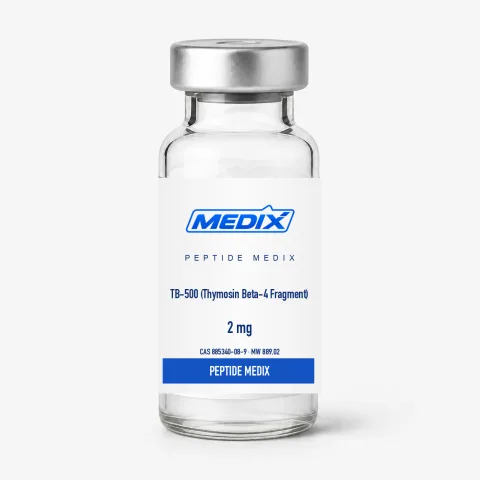
They are unrelated sequences studied in overlapping models. BPC-157 derives from a gastric protein and features heavily in gut and tendon research, while TB-500 is a short fragment of thymosin beta-4 associated with actin binding and cell migration. Some laboratories examine them together in blend form.
Related