- ≥99% by HPLC with mass-spectrometric identity check
- Lot-matched certificate of analysis
- Ships next business day, tracked
PTD-DBM
Cell-permeable CXXC5–Dishevelled blocking peptide used in Wnt pathway research
- FormWhite to off-white lyophilized powder in a sealed glass vial
- Research areasHair-follicle neogenesis, dermal papilla signalling, wound repair, Wnt pathway biology
Overview
PTD-DBM is a designed fusion peptide made of two functional parts: a protein transduction domain (PTD) that carries cargo across the cell membrane, joined to the Dishevelled-binding motif (DBM) taken from the protein CXXC5. CXXC5 acts as a negative regulator of Wnt/β-catenin signalling by binding Dishevelled and holding the pathway in check. The DBM fragment is used as a decoy: by occupying the same interaction surface it interferes with the CXXC5–Dishevelled association, and Wnt signalling is reported to be released from that brake in the models studied.
The peptide came out of Korean dermatology and molecular-biology research on hair-follicle neogenesis and wound repair, where topical application in mouse models was described alongside valproic acid as a second Wnt-activating input. Because it targets a protein–protein interaction rather than a receptor, PTD-DBM is used mainly as a mechanistic tool compound for asking what happens when the CXXC5 brake on β-catenin is removed.
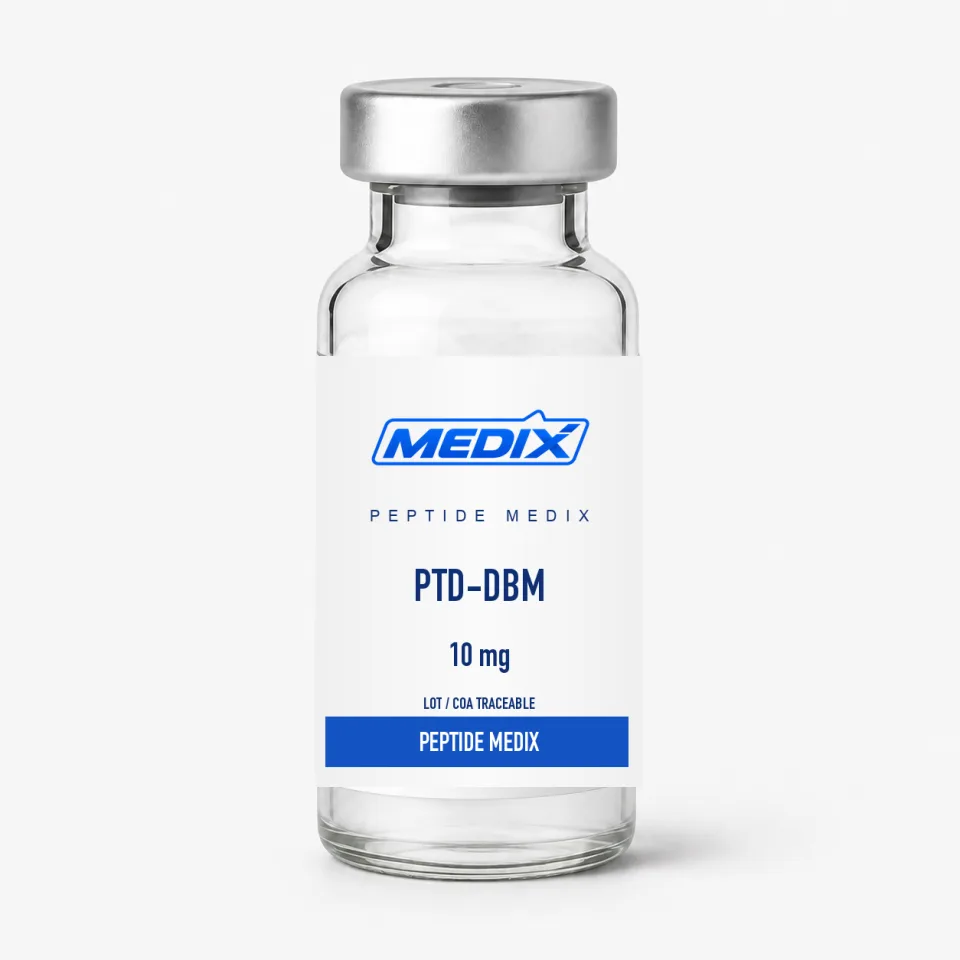
Peptide Medix supplies PTD-DBM as a lyophilized powder in 10 mg and 20 mg vials, third-party tested to ≥99% by HPLC with a lot-matched certificate of analysis, held and shipped in the United States.
Specifications
Identity
- Peptide class
- Cell-permeable fusion peptide; protein–protein interaction inhibitor
Supply & purity
- Form
- White to off-white lyophilized powder in a sealed glass vial
- Purity
- ≥99% by HPLC with mass-spectrometric identity check; COA per lot
- Available sizes
- 10 mg, 20 mg
- Solubility
- Sterile or bacteriostatic water; verify clarity before use
Handling & storage
- Storage (lyophilized)
- −20 °C, sealed, protected from light and moisture
- Storage (reconstituted)
- 2–8 °C for short study windows; aliquot to avoid freeze–thaw
Additional detail
- Construct
- Protein transduction domain fused to the Dishevelled-binding motif of CXXC5
- Molecular target
- CXXC5–Dishevelled interaction within Wnt/β-catenin signalling
- Research areas
- Hair-follicle neogenesis, dermal papilla signalling, wound repair, Wnt pathway biology
- Commonly co-studied with
- Valproic acid and other Wnt-activating inputs
- Vial contents
- Peptide only — no diluent, carrier or preservative
Working out the concentration
A lyophilized vial carries a mass on the label and no concentration anywhere, so the first calculation of any protocol is the reconstitution one. The peptide concentration calculator converts vial mass plus diluent volume into mg/mL, and back into the draw volume for a given mass.
Certificate of analysis
Every lot of PTD-DBM is released against a certificate of analysis: the batch-specific laboratory data for that lot, not a generic document for the compound. The lot number on the certificate matches the lot number printed on the label you receive — the vial label itself, where the product is vialled — so the record and the material it describes can always be reconciled.
Purity: ≥99% by HPLC with mass-spectrometric identity check — the specification for this listing. The figure for the lot you receive is the one reported on that lot’s certificate.
No lot certificate is on display on this page at the moment. That is a publishing state and not a testing one: lots are released and documented as described above whether or not the document is posted here, and we will send what exists for the lot in stock, or for a lot already on your bench, by its number.
Certificates are available on request before you order as well as after, with no account and no charge. Request the certificate for this listing, read the testing and documentation policy in full, or see how to read a peptide COA.
Questions about PTD-DBM
What is PTD-DBM?
PTD-DBM is a synthetic fusion peptide combining a protein transduction domain with the Dishevelled-binding motif of CXXC5. It is used in laboratory research as a decoy that competes with CXXC5 for Dishevelled, a protein–protein interaction that sits upstream of β-catenin in Wnt signalling.
Is this lot third-party tested, and can I see the COA?
Yes. Every production lot is analysed by an independent laboratory for identity and purity — HPLC with mass-spectrometric confirmation — and the lot-matched certificate of analysis is available on request before purchase. The COA states the lot number, assay result and test date so it can be filed with your experimental records.
What is in the vial and what sizes are available?
Each vial contains only lyophilized peptide, with no diluent, carrier or preservative, in either a 10 mg or a 20 mg size. The laboratory therefore controls the reconstitution vehicle, final concentration and any excipients required by the experimental design.
How is PTD-DBM reconstituted and stored?
Sterile or bacteriostatic water is the usual diluent; add it slowly against the vial wall and swirl until clear. Keep the sealed lyophilate at −20 °C away from light and moisture, hold reconstituted material at 2–8 °C in single-use aliquots, and avoid repeated freeze–thaw cycles.
Does the peptide have a published CAS number or sequence?
PTD-DBM is a designed research construct rather than a registered commodity chemical, and published descriptions vary in how the transduction domain and motif are reported. We list only the specifications confirmed on the lot certificate and leave CAS, formula and full sequence rows out rather than publish uncertain values.
Related