- ≥99% by HPLC with mass-spectrometric identity check
- Lot-matched certificate of analysis
- Ships next business day, tracked
Zinc Thymulin
Zinc-complexed thymulin nonapeptide for follicle and immune-signalling research
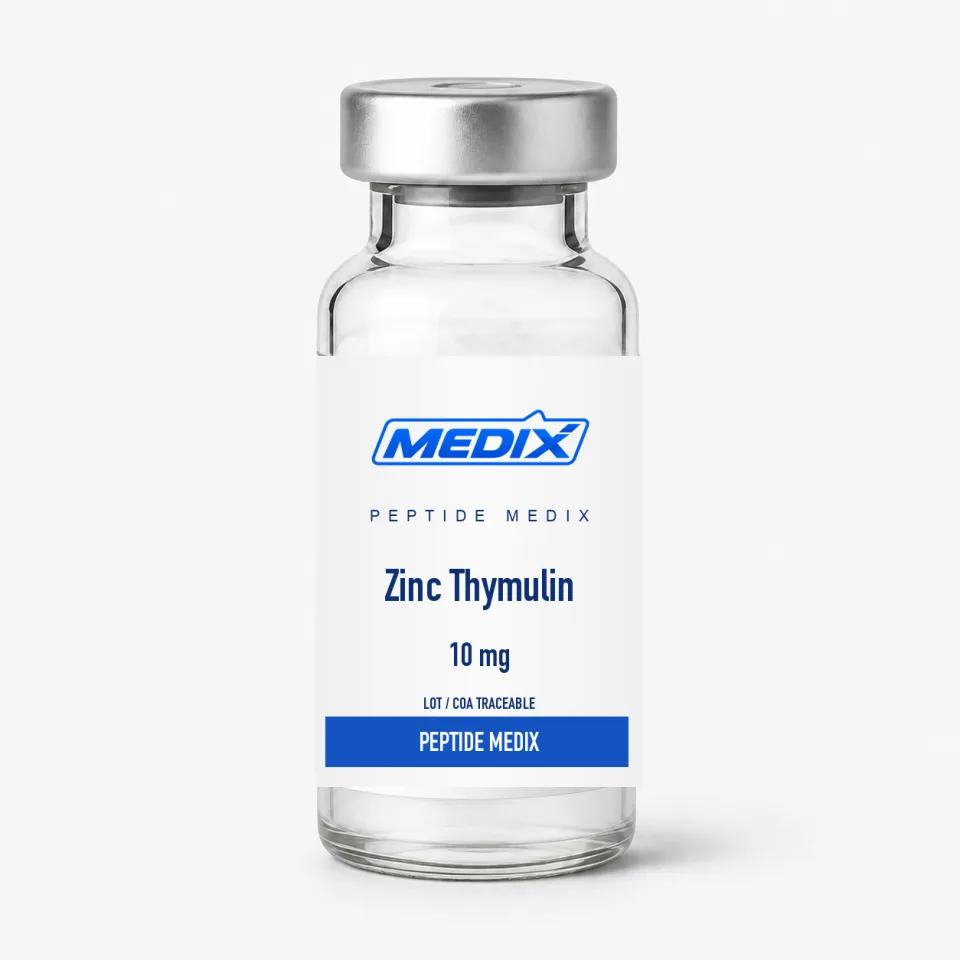
- FormWhite lyophilized powder in a sealed glass vial
- Research areasHair-follicle anagen models, thymic signalling, T-cell differentiation, zinc–immune interaction
Overview
Zinc thymulin is the biologically relevant form of thymulin, a nonapeptide originally isolated from thymic epithelium and known in the older literature as facteur thymique sérique (FTS). Thymulin only adopts its active conformation when it coordinates a zinc ion; the apo-peptide is present in circulation but is described as inactive until zinc binds. Supplying the peptide as a zinc complex therefore removes a variable that has confounded a good deal of the historical thymulin literature.
Two research threads run through the material. The first is immunology: thymulin was characterised for its role in T-lymphocyte differentiation and thymic signalling, and its zinc dependence made it a recurring example in work connecting zinc status to immune competence. The second is dermatology, where zinc thymulin has been examined in hair-follicle models and in topical scalp preparations for effects on the follicular growth phase.
Peptide Medix supplies zinc thymulin as a lyophilized powder in a 10 mg vial, third-party tested to ≥99% by HPLC with a lot-matched certificate of analysis, shipped from the United States. It is offered strictly for laboratory research.
Specifications
Identity
- Peptide class
- Thymic nonapeptide hormone analog
Supply & purity
- Form
- White lyophilized powder in a sealed glass vial
- Purity
- ≥99% by HPLC with mass-spectrometric identity check; COA per lot
- Solubility
- Sterile or bacteriostatic water; avoid strong chelators that would strip zinc
Handling & storage
- Storage (lyophilized)
- −20 °C, sealed, protected from light and moisture
- Storage (reconstituted)
- 2–8 °C, short study window; single-use aliquots preferred
Additional detail
- Available size
- 10 mg
- Base peptide
- Thymulin (facteur thymique sérique, FTS) — nonapeptide
- Base peptide sequence
- pGlu-Ala-Lys-Ser-Gln-Gly-Gly-Ser-Asn
- Base peptide CAS number
- 63958-90-7 (thymulin)
- Metal coordination
- Zinc(II) complex — required for the active conformation
- Research areas
- Hair-follicle anagen models, thymic signalling, T-cell differentiation, zinc–immune interaction
- Vial contents
- Peptide complex only — no diluent, carrier or preservative
Working out the concentration
Zinc Thymulin ships as a lyophilized powder, so nothing on this page can state a concentration: the figure you work with is the one you create when you add diluent. Put the vial mass and the volume you intend to use into the peptide reconstitution calculator and it returns mg/mL, mcg/mL and the mass sitting at each mark on a U-100 syringe.
Certificate of analysis
Every lot of Zinc Thymulin is released against a certificate of analysis: the batch-specific laboratory data for that lot, not a generic document for the compound. The lot number on the certificate matches the lot number printed on the label you receive — the vial label itself, where the product is vialled — so the record and the material it describes can always be reconciled.
Purity: ≥99% by HPLC with mass-spectrometric identity check — the specification for this listing. The figure for the lot you receive is the one reported on that lot’s certificate.
No lot certificate is on display on this page at the moment. That is a publishing state and not a testing one: lots are released and documented as described above whether or not the document is posted here, and we will send what exists for the lot in stock, or for a lot already on your bench, by its number.
Certificates are available on request before you order as well as after, with no account and no charge. Request the certificate for this listing, read the testing and documentation policy in full, or see how to read a peptide COA.
Questions about Zinc Thymulin
What is zinc thymulin?
It is the thymulin nonapeptide supplied as a zinc complex. Thymulin, historically called facteur thymique sérique, is a thymic peptide whose activity in classical assays depends on coordinating a zinc ion. The complexed form is used when researchers need the conformation described as biologically active.
Why does the zinc matter?
The apo-peptide and the zinc-bound peptide behave differently. Early inconsistencies in the thymulin literature were traced in part to uncontrolled zinc availability. Working with the complex, and avoiding chelating buffers, keeps the coordination state defined so results can be compared between experiments.
Is this lot third-party tested, and can I see the COA?
Yes. Every production lot is analysed by an independent laboratory for identity and purity — HPLC with mass-spectrometric confirmation — and the lot-matched certificate of analysis is available on request before purchase. The COA states the lot number, assay result and test date so it can be filed with your experimental records.
How does it relate to plain thymulin?
The peptide sequence is identical — pGlu-Ala-Lys-Ser-Gln-Gly-Gly-Ser-Asn. The difference is the coordinated zinc ion. Laboratories running comparisons often include both the complex and the uncomplexed peptide so that any observed effect can be attributed to the metal-bound conformation.
How should it be stored?
Keep the sealed lyophilized vial at −20 °C, protected from light and moisture. After reconstitution, hold the solution at 2–8 °C, use single-use aliquots and work within a short defined window. Avoid repeated freeze–thaw cycles and chelator-containing buffers during storage.
Related